Hasta la never, 2025! You have been universally terrible. You hath wrought misery and/or ailment upon nearly every person I hold near and dear. The year you’ve dealt us has resoundingly sucked.
Thank god for escapism.
I’ve read and read and read this year, because, you know, of everything, so here’s my top ten (list of everything I’ve read further down).
Top Ten first time reads:
#10 : Trainspotting – Irvine Welsh
I don’t need to tell you what this one’s about. “Who needs reasons when you’ve got heroin?”.
An unusual pick for me but my god. Absolutely brutal, thoroughly emotionally taxing, viscerally disgusting at times – and yet what a sick delight to read. To experience the pleasure of forcing my brain to read phonetically before it was able to pick up the pattern of the Scottish dialects. An utterly, utterly brilliant piece of writing.

#9: Lady’s Knight – Amie Kauffman and Meagan Spooner
I’m so glad we seem to be experiencing a cultural moment firstly of lesbian knights and also of Medieval revivalism/Renaissance maximalism – the drama! the panache!!
My journal from the period in which I read Lady’s Knight is covered with pictures from Chappell Roan’s visions of damsels and other dangerous things tour, Kate Bush as Joan of Arc, the front cover of The Return to Camelot: Chivalry and the English Gentleman, Florence Welch in all her Pre-Raphaelite mysticism wonder, the Unicorn Tapestries at the Metropolitan Museum of New York, and ER Fightmaster in knight garb for Polyester magazine forgive me I am only human.
Wildly enjoyed this cute, funny little YA tale of dragons and jousts and lesbians, which I read in cosy pyjamas on someone else’s gorgeous sofa in someone else’s gorgeous flat in the centre of Glastonbury after dragging my poor girlfriend up the Tor. More pastiche than historiographic metafiction, it was everything I needed in that particular moment, and I really can’t wait for the next one.
#8: Undercover – Tamsyn Muir
This space Western short story about a bodyguard charged with managing a surprisingly sentient zombie-turned-burlesque dancer is by the author of Gideon the Ninth, who I continue to allow to ruin my actual life. She’s so good at creating a sense of place and ambiance in only a handful of words, and I’ve been back to this several times over the last year to pick up more fun world-building detail on each re-read.
7: The Secret Garden – Frances Hodgson Burnett
Not TECHNICALLY a first time read, but probably a first time in this millennium read. Picked this up following a recommendation on a podcast interview with Virginia Feito (on whom more later) who said she reads The Secret Garden as a surprisingly brutal Gothic tale. It can’t be too bad, says I, opening to the title of the first chapter: There Is No One Left.
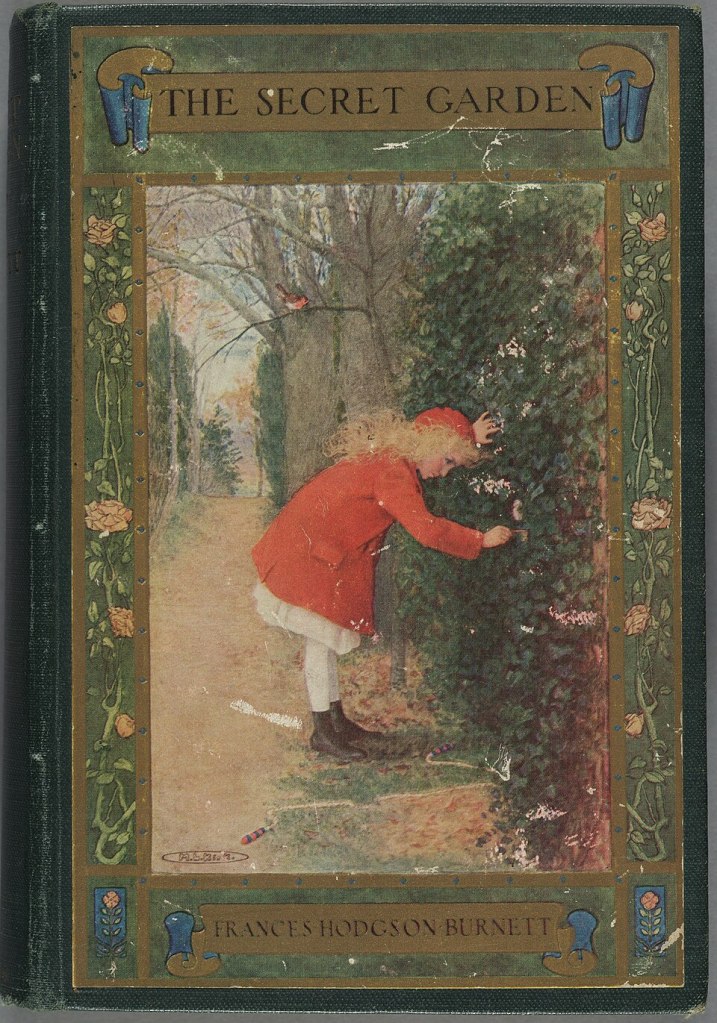
The horrors of plague and bereavement and unreleased anger is so well balanced with themes of the redemptive power of nature, and more specifically, the gentle industriousness needed to revive, encourage, and cultivate living things. The Secret Garden is such a wonderfully strange, pagan book – in my reader’s eye, the Great God Pan seems to lurk just out of view of the children as they practice daily rites and nature worship. This culty activity is led by Colin, who is reborn not as Jesus but as something good, grown from the English soil. Perhaps a reversal of folk horror’s interest in sinister unearthings?
#6: The Signature of All Things – Elizabeth Gilbert
I adore a novel that carries you through times past and places altered by the centuries gone – I recently finished V. E. Schwab’s Bury Our Bones in the Midnight Soil, which offered a similar balance between vast expanse and minute detail to that Gilbert creates in The Signature of All Things. Alma Whittaker, an explorer’s daughter, is born with the nineteenth century in the year 1800, and we follow as she grows from her unusual family’s roots into her own person: a devoted botanist and moss expert. She has many moments of ‘becoming’ throughout her life which is backdropped by the rapid changes of the 1800s, and her spiritual, emotional, and scientific journey takes her on journeys across the globe. Gilbert writes with such clear love for humanity and human experience – from the utterly sublime to the thoroughly unflattering – in this novel, and I challenge you to not read it and find something special, something particular to you, that you can take away.
#5: Honeysuckle Cottage – P. G. Wodehouse
I will read anything at all Julia Armfield recommends and had this to say about it but I am once again begging someone to please write a version of this story with all the trappings of modern bestseller romance fiction: I’m thinking werewolf lumberjack sugar daddies, billionaire ice hockey players, CEOs who are also minotaurs who run small town bakeries.
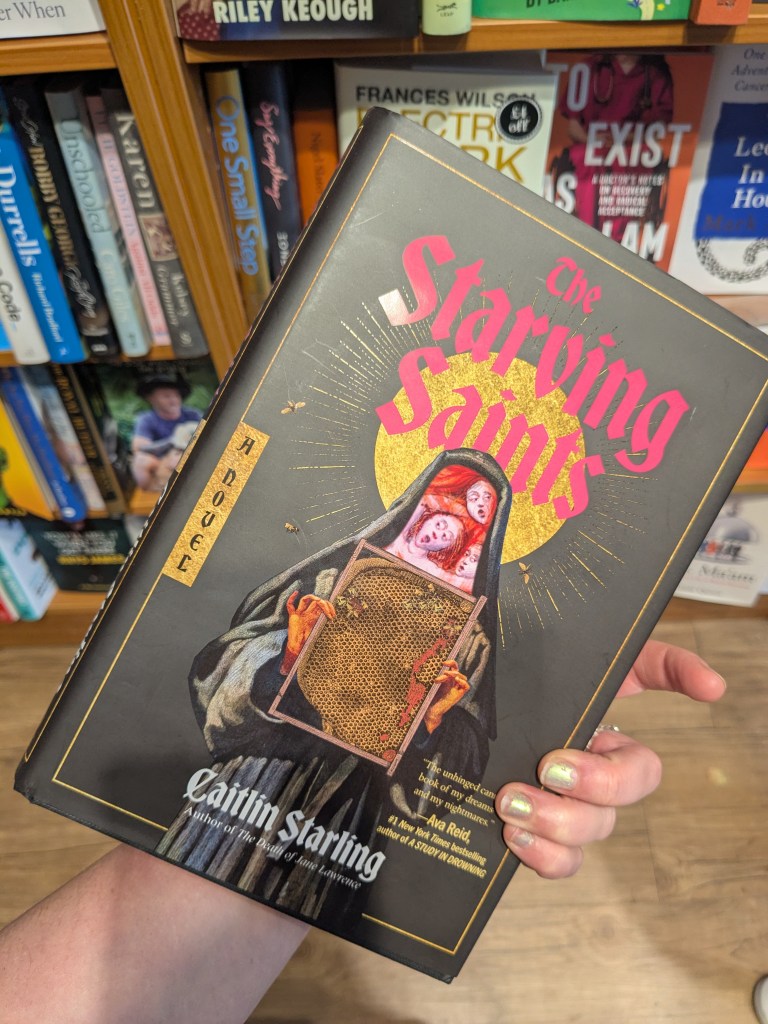
#4: The Starving Saints – Caitlin Starling
With food supplies rapidly running out, a besieged walled city is close to falling to the enemy – until the miraculous and inexplicable arrival of the Saints.
The Starving Saints is easily one of the most enjoyable novels I’ve read in ages and absolutely the horniest.
The plot centres around the changing alliances of three women – a mad nun, a ratcatcher seeking revenge, and a big strong lady knight (another blessing of this season in publishing). There is plenty of the sensual and sexual in The Starving Saints, but sword-wielding Ser Voyne’s erotically charged relationship to service, obligation and fealty was a particular treat to read. I felt part of this book in my muscles, on my skin: it was an absolute fever dream to read, powering through it on a short loan from the library.
As an extremely unwell teenager I developed a very normal fixation with the concept and practice of holy anorexia, and as an adult, I’m still fascinated by the thematic intertwining of food and sex – particularly when they are forbidden, or a person chooses to abstain.
#3: The Custom of the Country – Edith Wharton
An unexpected treat, this one. With hand on heart I must admit to you that I only picked this up as I needed to read a story with a character named ‘Undine Spragg’ – who, I later found out, is a ruthless social climber who attempts to scale the many-runged ladder of early 20th century New York City society. It is a perfect blend of Wharton tragedy and Wharton comedy and above all a rollicking good tale, in turns painfully frustrating and generously hilarious.
Exploring themes of society, entitlement, the halo effect, the image, and vanity, this is such a key read for our age of “shop like a billionaire” overconsumption.
#2: Orpheus Builds A Girl – Heather Parry
A Gothic tale, loosely based on the real story of a man who steals a girl from her grave. That’s all I’m telling you. Find this and read it.
To be quite honest I nearly lost my marbles a few times over how good this was – so clever and yet so utterly sick that I had to fight the compulsion to throw the book across the room a couple of times.

Orpheus Builds A Girl doesn’t shy away from the Poe horror of the subject but is perfectly paced to create a creeping sense of dread and anger. Parry’s depiction of multiple voices is masterful, as is her use of these voices to create opposing narratives and perspectives. As an exploration of power and male entitlement – as well as grief and autonomy – I’ve never read anything like it. An absolutely phenomenal piece of writing.
#1: Victorian Psycho – Virginia Feito
I have read this book three times this year and will love it until I am dead.
It is somewhere in England and some time in the 1800s. Winifred Notty has come to the Gothic estate of Ensor House, in which she will work as governess to a family with two small children. She is also completely fucking insane.
I was brought up on Brontë and am very well acquainted with fiction concerning the governess and her liminal role in Victorian society; her uniquely isolating and vulnerable position between the spheres of family and servant, the discursive space she occupies as a woman raising another’s children in an era with such a limited view on ‘good womanhood’.
You can approach Victorian Psycho many ways, but I didn’t read this as satire on the Angel in the House trope of 19th century fiction, or even as sick sad lit for feral girls who dream of revenge. This, to me, is literary horror comedy through and through, and its timing is razor-sharp. Feito’s attention to the form and language conventions of nineteenth century governess fiction, and her ability to both mimic and subvert its expectations, is an absolute thing of joy.
There’s rabies, cholera, syphilis. A plot involving an infant swap. The spectre of the noose, which might be a memory of the past or the future. The period-accurate unwrapping of an Egyptian mummy, for god’s sake. As Winifred observes upon her entry to Ensor House: “My soul turns its curdled, stinking head towards us and says, ‘I do believe I shall be quite content here.'”
What I read this year (some of which are re-reads), in the order what I read them:
[Please note: this list represents my full intake of paperbacks, ebooks, audiobooks, graphic novels, adult fiction, non-fiction, memoir, biography, YA, and children’s literature, including short stories ready independently of collections, read in library, second-hand, and new book format.]
The Signature of All Things – Elizabeth Gilbert
Wakenhyrst – Michelle Paver
Gearbreakers – Zoe Hana Mikuta
Everything Under – Daisy Johnson
The Wood at Midwinter – Suzanna Clarke
She – H. Rider Haggard
The Art of Dying – Ambrose Parry
I’m A Fan – Sheena Patel
Taste – Stanley Tucci
Such Lovely Skin – Tatiana Schlote-Bonne
Rouge – Mona Awad
Don’t Look Now – Daphne du Maurier
Arthur and George – Julian Barnes
Death of a Bookseller – Alice Slater
Gideon the Ninth – Tamsyn Muir
The Miseducation of Cameron Post – Emily M. Danforth
Undercover – Tamsyn Muir
Airhead – Emily Maitlis
Butter – Asako Yuzuki
The Six Deaths of the Saint – Alix E. Harrow
Rivals – Jilly Cooper
Uncanny Valley: A Memoir – Anna Wiener
Crazy Rich Asians – Kevin Kwan
She Gets the Girl – Rachael Lippincott and Alyson Derrick
Victorian Psycho – Virginia Feito
The Hierarchies – Ros Anderson
Six Flights to Terror – Manly Banister
History of the Necronomicon – H. P. Lovecraft
What A Way To Go – Bella Mackie
Delilah Green Doesn’t Care – Ashley Herring Blake
Hungerstone – Kat Dunn
The Secret Garden – Frances Hodgson Burnett
When I Arrived at the Castle – Emily Carroll
Flashman – George MacDonald Fraser
The Bad Beginning – Lemony Snicket
Bioshock: Rapture – John Shirley
Wilder Girls – Rory Power
The Reptile Room – Lemony Snicket
The Day of the Triffids – John Wyndham
Harrow the Ninth – Tamsyn Muir
The Lamb – Lucy Rose
Lovecraft Country – Matt Ruff
Good Omens – Terry Pratchett and Neil Gaiman
Trainspotting – Irvine Welsh
Lost in the Garden – Adam S. Leslie
Less Than Zero – Brett Easton Ellis
Let The Bad Times Roll – Alice Slater
Jawbone – Monica Ojeda
Flatland: A Romance of Many Dimension – Edwin Abbott
The Jelly Bean – F. Scott Fitzgerald
Horror Story – Carmen Maria Machado
Her Body and Other Parties – Carmen Maria Machado
The Custom of the Country – Edith Wharton
Orpheus Builds A Girl – Heather Parry
Things Have Gotten Worse Since We Last Spoke – Eric LaRossa
The Trees – Percival Everett
Witches, Warriors, Women – Kate Hodges
The Leopard – Giuseppe Tomasi di Lampedusa
The Virgin Suicides – Jeffrey Eugenides
Empty Heaven – Freddie Kölsch
The Horned God of the Witches – Jason Mankey
The Foundling – Stacey Halls
The Cask of Amontillado – Edgar Allen Poe
Lady’s Knight – Amie Kauffman and Meagan Spooner
The Starving Saints – Caitlin Starling
The Anxiety Solution – Chloe Brotheridge
Dark Carnival: Tod Browning, Hollywood’s Master of the Macabre – David J. Skal and Elias Sevada
Sedating Elaine – Dawn Winter
Gentleman Jack – Angela Steidele
The Luminous Dead – Caitlin Starling
The Inverts – Crystal Jeans
Rainforest – Michelle Paver
Bunny – Mona Awad
Love at First Set – Jennifer Dugan
Invisible Women – Caroline Criado Perez
Honeysuckle Cottage – P. G. Wodehouse
Bury Our Bones in the Midnight Soil – V. E. Schwab
The Room in the Tower – E. F. Benson
Femme Feral – Sam Beckbessinger

 Emily Jessica Turner